Tag: regeneration

Cindie Christiansen – Top 50 Farmers update and the simple tweak to raise millions for regeneration

A check in conversation with Cindie Christiansen, founder of Foodprint Nordic and Top 50 Farmers (no, it’s not a ranking, so nobody “won”). We spoke just six months ago, but this time we met in person to talk about the progress of turning farmers into the next superheroes of climate, water, health, and more.

We unpack her vision for systems change in food and agriculture. Directly from one of the world’s leading culinary scenes, Copenhagen, we ask: why hasn’t a strong farm-to-table, local cuisine movement led to real change in the agrifood system yet? And more importantly, what can we do about it?

We dive into her work with Foodprint Nordic and how they’re about to expand it to the rest of Europe. Very simply, but of course, it’s not that simple, the idea is to access a whole new pool of money not yet active in this space: the money of us eaters, and funnel it as quickly and with as few strings attached as possible to farmers ready to expand regenerative practices, planting trees, buying compost equipment, and more.

And even more importantly, how this approach could serve as a blueprint for real regional, and potentially national, action, helping shape government policy that truly supports regenerative farmers on the ground.

Darren Doherty – 35 years in regeneration training farmers and the role of tech and AI

A conversation with Darren J Doherty, co-founder of Regrarians, in the space of regeneration and regenerating for over 35 years, about the role of technology, AI, and large language models in training farmers and agronomists. We touch on how expensive and too-short workshops are hurting everyone, and why a hybrid model, grounded on the land and in person, combined with much longer online engagement, might be one way to move forward.

We also explore what it means to reinvent yourself after spending years deeply immersed in a project, only to resurface and realise the regenerative world has shifted. Suddenly, you need to work harder to get attention, to find work, and to fill your courses. And yet, there’s so much value in being able to draw on decades of experience and the thousands upon thousands of farmers and land stewards you’ve worked with through times of transition.

We ask why larger corporations haven’t reached out to tap into this expertise: why aren’t they calling about training their farmers or agronomists? It seems we may be exiting the phase of dogmatic pioneers, the era when it had to be permaculture, or holistic management, or keyline design, and entering something more pragmatic. A moment where the focus is shifting toward whatever actually works: on your land, in your human context, and within your market.

Thomas Hogenhaven – The €22M regen fund that said no to €7M

After three years, Thomas Hogenhaven, founder of Planetary Impact Ventures, is back on the podcast. Thomas and his team just turned down a $7 million investment in their fund. That’s right—said no to $7 million. And this wasn’t some shady source of capital either. This was a serious, institutional investor, fully compliant with KYC requirements. So… why walk away?

It comes down to values and incentives. When you’re building one of the most radical investment funds in the regenerative space, with an evergreen structure and no carry, you can’t afford to compromise. If you let investors in who start nudging you toward their own impact goals- let’s say, a focus on water savings- you risk skewing your entire investment strategy. Drip irrigation might look great on a report measuring millions of liters saved, but that’s not the point here.

Instead the super brave thing to do is say no to these kind of impact measures and trust that the structure and the alligned incentives will automatically make sure you only invest in the most radical founders. This radical approach has ripple effects. Like you might refuse to invest in a company, for example a drone platform, which could be used to spray compost tea. This radical fund will force the company to sign as part of the investment terms to never use the drone spraying platform for the agro chemical industry, but only for agroecological purposes.

Do you see how a new investment paradigm starts to take shape?

Marco Carbonara – Using 10 species of animals to profitably regenerate 100 hectares of forgotten Italian land between Rome and Florence

A conversation with Marco Carbonara, cofounder, owner and farmer at Pulicaro Farm, in Lazio, Italy. A special early morning walk through permanent pasture surrounded by multispecies graziers, donkeys, cows, sheep, goats, chickens and, of course, some guard dogs, which means a lot of pleasant and present background sounds. We are in the hills between Rome and Florence and have the great pleasure to visit the farm of Marco and Chiara. Marco takes us on the morning walk to feel, smell, and see regeneration of permanent pastures in a Mediterranean landscape. Definitely not easy, but definitely possible, and yes, also profitable.

How did Marco, who had no farming experience 20 years ago, approach regeneration back then, and how does he approach it now? When they take on new lands, what are the first steps, and how much has he learned over the last 20 years? What is the role of animals in regenerating the Mediterranean landscape, and how does he handle the challenging balance between running a company, needing to break even, and wanting to regenerate as quickly as possible?

We also discuss the challenge of feed: is it okay to bring feed for the non-ruminants in your rotation from outside the farm when your soils can’t yet sustain needy plants like wheat, barley, etc.? And if it is, how do you deal with the challenge of potentially competing for human food? We only scratched the surface because it’s impossible to capture 20years of deep regeneration in just one hour, but we tried and we hope you enjoyed listening to it as much as we did recording it.

Cindie Christiansen and Analisa Winther – How a first-time non-profit raised almost €1 million to put 50 top regen farmers in the spotlight

A conversation with Cindie Christiansen and Analisa Winther, founder of Top 50 Farmers, about the narrative around farmers and how it has to change. Less than 12% of farmers in the EU are under 40, and it isn’t seen as “sexy.” The stereotype of a 60-year-old white man on a tractor isn’t helping, and no, driverless tractors are not going to take care of our farming anytime soon. So how do we change that? One way is to put the current trailblazers, the pioneering regenerative farmers, in the spotlight by connecting them with resources and with each other, and yes, even with corporations, to turn this into a real movement and to change the public narrative.

Farming can be at least as sexy— probably more so— as being a chef. Do you remember when chefs weren’t famous and didn’t have book deals or Netflix series? That has drastically changed in the last few decades. We need to do the same with farming and farmers. Great, lofty goals—but how do you go about it? How do you finance something like this? Stay true to yourself and make sure you don’t burn out, which wouldn’t be very regenerative. All things we unpack in this episode.

Sonja Stuchtey – Have billions flow into regeneration by having accountants agreeing that it is an investment, not a cost

A conversation with Sonja Stuchtey, co-founder of The Landbanking Group, about innovative financial strategies, accountancy standards and rules, reliable sourcing, better quality and lower prices, investing in the value chain and more.

Let’s say you are an orange juice or chocolate bar producer: your margins are under pressure because the costs of buying raw ingredients have exploded the last few years. What do you do? In any other business you would likely invest in your supply to secure reliable sourcing, better quality and potentially lower prices. Why haven’t we done that in regen (with some exceptions of fully vertically integrated brands)? Now it seems possible for companies to invest in their value chain so to allow orange farmers to make regen changes in the practises to future proof them. 

How? Crucially it comes back to treat it as a long term investment and not as a short term cost which will hurt you margins and, thus, annoy your shareholders. Treating investments (which btw we need billions) in regen as an investment and not a cost sounds so trivial and simple, but it takes a whole lot of technology to measure, report and a lot of talks with the big four accountancy firms to get this done.

Anthony Myint – Sourcing better isn’t going to change the food system, award-winning chef might have the silver bullet for system change

A conversation with Anthony Myint, co-founder and executive director of Zero Foodprint. Award winning chef, Myint was disappointed about his impact on acres by his farm to table restaurants and he is now fully committed to systems change. Koen and Anthony talk about how to really move the needle on many more new practice acres which are acres where regenerative practices are used for the first time, opting out mechanisms where a small opt out fee is added to restaurant bills and food products, collective regeneration, and much more.

REGENERATIVE MIND – Emma Chow and Jessica Hutchings – Connecting soil with the stars

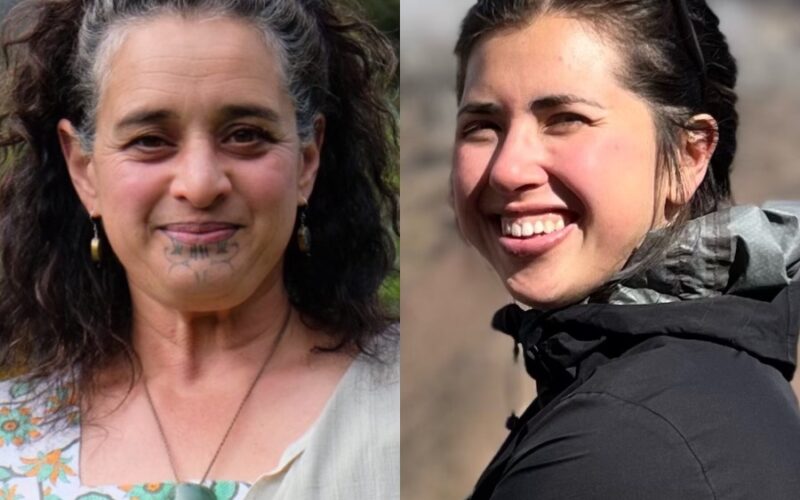
A conversation with Jessica Hutchings, a Maori researcher and apothecary, about indigenous knowledge, letting go of old mindsets, our relationship with nature and the deities of our landscapes. A deep dive in the New Zealand food system, indigenous ways to connect with soil and the food web, sound of plants, vibration of nature and much more.

REGENERATIVE MIND – Emma Chow and Calla Rose Ostrander – In our healing is our evolution as a society

Emma Chow and Calla Rose Ostrander explore the regenerative mindset and the importance of integrating human behaviours into natural cycles, recognising abundance and the physical capacity for healing, burnout, the perception of time scarcity, prioritising regenerative activities, and much more.

REGENERATIVE MIND – Emma Chow, Thomas Legrand and Luis Camargo – Shifting the narrative to capture food’s positive potential

A conversation with Luis Camargo and Thomas Legrand about the regenerative mindset in food systems, transforming the inner capacities for sustainability and regeneration, personal growth through reconnection with nature, food systems and narratives, and much more.