
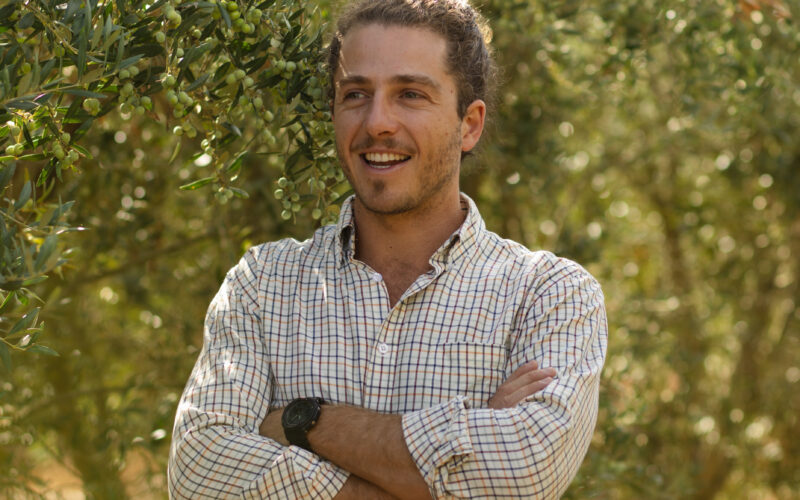
Dimitri Tsitos – The massive opportunity of regenerative practices in intensive tree crops and why data is the only thing that will unlock it
This is a check-in conversation, an update on what three years of stacked regenerative practices on a real commercial almond plot is beginning to show with Dimitri Tsitos, co-founder of Agrosystemic and leading the Arbo-Innova project with real data now starting to come in.
Regenerative practices clearly work in these systems. But which ones? In what order? And how many at the same time before you’re doing more harm than good?
Take the clovers growing in the tree lines — what Dimitri calls living mulch. They fix nitrogen and push more of it into the tree than conventional fertilisation does. But in the first years, they also compete with the young trees for water, leading to slower early growth. Is that trade-off worth it? Do the trees catch up?
What the first data is already showing: Herbicide applications halved in a single season. Nitrogen levels inside trees on clover-berm plots higher than in conventional neighbours. Fungal disease pressure significantly lower on the organic test plot — with three bacterial spray rounds versus the neighbours’ ten synthetic ones. And an industry that, until recently, was watching from a distance, now leaning in.
None of this is easy. The J-curve of transition is real. The compromises — between tree establishment and soil cover, between water competition and nitrogen gain — are real. But the first data is clear: regenerative practices offer massive opportunities to reduce the environmental impact of intensive orchard systems in a profitable way. More resilient industry. Huge environmental wins. A transition that pays.
