Tag: human health

Farm data, nutrient density and biodiversity: who owns the value farmers create? Live @Groundswell ’26

Recorded in person at Groundswell, the UK’s largest regenerative agriculture festival, held each summer in Hertfordshire, this is a 55-minute panel session moderated by Koen van Seijen, bringing together four practitioners who spend their working lives at the intersection of farm data, investment, soil science, and biodiversity monitoring. The question on the table: who actually benefits when data is collected from farms? And is the answer changing?

The four panellists: Ichsani Wheeler, a soil scientist who grew up in permaculture and now uses open-source satellite data and AI to map soil carbon and gross primary productivity at 30-metre resolution across the globe; Benedikt Bösel, farmer of a 1,000-hectare arable and 2,000-hectare forestry operation in eastern Brandenburg, Germany, who has been running a full digital twin of his farm alongside the physical operation; Antony Yousefian, co-founder of The First Thirty — a reference to the first thirty centimetres of soil — an investment firm focused on the infrastructure needed to turn farms into preventative healthcare systems; and Matthijs Westerwoudt, co-founder of Wilder Land, who is building what he describes as a Strava for biodiversity, using AI-powered acoustic monitoring to give farmers real-time data on the birds, bats, and insects living on their land.

In this session, opened with a recording of birdsong from a regenerative farm in the Netherlands played to the 9am audience, the conversation moves from remote sensing and registry projects to the £30,000 value the NHS places on a single quality-adjusted life year (QALY), from the danger of farm data being used to set geographically-based input pricing against the farmer who generated it, to the moment Benedikt’s doctor told him she had never seen iron levels like his wife’s after giving birth, and why only 4% of his customers scanned the QR code that would have told them everything about the specific cow whose meat they were eating.

Eric Smith – Why nutrient density data is changing everything we know about food and farming

Eric Smith is the founder of Edacious, a company building the infrastructure to make food quality and nutrient density measurable, objective and comparable. After spending years building a nutrition-testing platform capable of measuring macronutrients, micronutrients, bioactives and phytochemicals, alongside the benchmarks and data systems needed to make those measurements useful, he returns to sit down with us to share what they have been building, how the field of nutritional testing has evolved, and the critical insights they have uncovered.

At the heart of Eric’s work is a simple belief:  if consumers can access and verify the quality of their food, they will demand products grown in ways that prioritize soil health and regenerative practices. This increased market demand will structurally direct more money into the pockets of farmers and land stewards, enabling them to expand regenerative agriculture across more hectares, creating a self-sustaining loop of human and ecological health. To ground this concept in science, Edacious leverages the GEM framework—Genetics x Environment x Management practice = Nutrition instead of Yield—moving beyond subjective labels to deliver objective, verified data.

This episode is a deep, down-to-earth dive into the nuts and bolts of quality, nutrient density, and systemic agricultural change. Eric teases the science behind Edacious’ preeminent nutrition lab, which has processed over 6,000 food samples and generated nearly a million analytical data points. The conversation exposes the compromises of industrial crop breeding through the story of carrots, compares apples to apples, reveals the massive nutritional differences hidden in the skins of produce, and explores how Eric’s own eating habits have transformed since he gained direct access to the data, including a surprising advocacy for frozen food and ancient grains.

Raiza Rezende – Soil health and human health: why the science is still years behind the hype

Brazilian-trained chemical engineer, Raiza Rezende left a career path lined up by petroleum, gas, and pharmaceutical companies to study syntropic agriculture with Ernst Götsch, then WWOOFed her way across Spain, Portugal, and Greece before co-founding two organisations working from opposite ends of the same problem: Agrosystemic, which helps large farms in Portugal and Brazil transition toward regenerative practices, and RHEA, the Regenerative Healthcare European Association, which is trying to prove — with hard data — that healthy soil produces healthier people.

Pull one carrot out of the ground and test it, and the number on the lab report tells you almost nothing. Is its vitamin A content high or low? Compared to what? That’s the problem sitting underneath the entire “nutrient density” conversation, and it’s the one Raiza keeps running into: without thousands of samples across farms, regions, and varieties, a single result is just a number with nowhere to stand.

In this conversation recorded in a Lisbon park, with the podcast’s producer Antonella Totaro taking over hosting duties for the first time, we get into Raiza’s path from an oil-and-gas-sponsored engineering campus in Rio to the most desertified farmland in Portugal, why Agrosystemic refuses to tell conventional farmers they’re doing it “wrong”, what four real farms and 40-plus measured parameters are starting to reveal about nutrient density, why €700 billion a year in EU disease treatment costs hasn’t yet connected soil research to health research, and why, with a magic wand or a billion euros, she’d skip the technology and put the money straight into farmers.
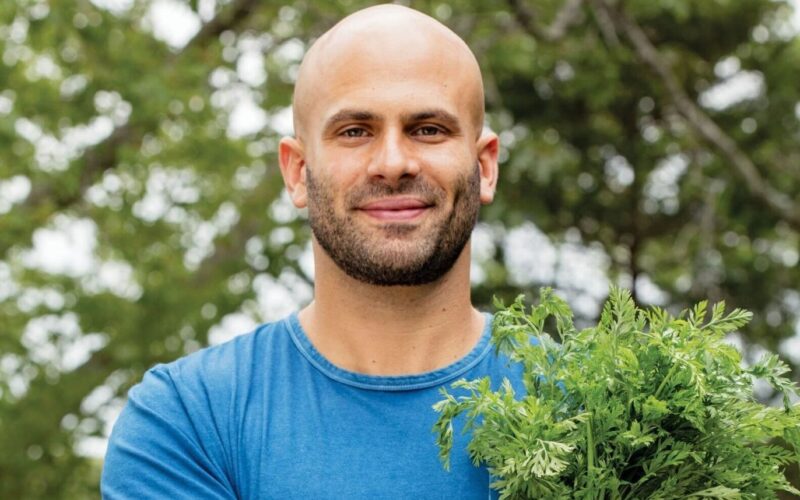
Sam Kass – Get people access to carrots before talking about nutrient density, former Obama’s chef and nutrition advisor turned investor says

A conversation with Sam Kass, former White House Chef and Senior Policy Advisor for Nutrition of the Obama’s administration and partner at Acre VC. We talk about the potential of VC in the space, the challenges of the real world and why we should focus on getting everyone access to carrots before focusing on the quality and growing practices, why carbon payments is a very interesting and real entry point to scale, and more.

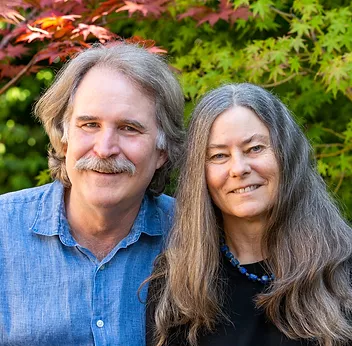
Anne Biklé and David R Montgomery – After studying more than 1000 papers the definitive answer, we are what our food ate

Anne Bikle and David R Montgomery, writers of What your food ate, join us to talk about the connection between soil- building agriculture practices and human health, and the differences in healthy compounds in our food, both plants and animal protein connected to the way that food has been grown.