Tag: taste

Sherry Hess – Hijacked Flavour: reclaiming taste from the food industry

Your tongue might be the most underused tool we have for understanding food quality — and for moving consumer buying power toward regenerative farming. Sherry Hess, culinary professional, nutritionist, and founder of Legendary Spice, makes the case that taste is not a nice-to-have. It is a powerful biological signal, and the food processing industry has understood this far longer than we have.
We go deep on the five tastes — salty, sweet, sour, bitter, and umami — and on why ultra-processed food has been so effective at training us toward intense sweetness while stripping out complexity. Sherry argues that bitterness isn’t a flaw to engineer out; it’s the missing piece tied to polyphenols, antioxidants, detoxification, glucose metabolism, and satiety. The good news: chefs already know how to balance bitter with umami, fat, protein, and spice. We don’t all need to go to culinary school — we just need to borrow a few of their moves.
We also take apart the “chocolate steak syndrome”: the fitness industry has built an entire pipeline of protein products with steak-level nutrition engineered to taste like chocolate and in doing so, trained a generation to completely ignore what flavour is actually telling them. For investors and brand builders, Sherry has a practical provocation: if a product claiming to be regenerative needs five or six flavourings on the label, it’s almost certainly masking the low quality of what’s underneath

Lauren Tucker – Inner regen work, gut molds, almonds groves in the Central Valley and taste buds

This is a check-in conversation with Lauren Tucker, co-founder of Kiss the Ground and Renourish Studios. We talk about wrapping up the cohort at Renourish Studio, where they’ve worked for three years with a diverse group of entrepreneurs and investors across the US food and agriculture system.

How do you bring the fact that we are part of a living system into your work in commercial organisations? Lauren shares lessons learned, and what they’re doing moving forward. How much of this work is inner work—how we see the world, what we think is possible and not—vs. outer work like planting cover crops, digging swales, showing the financials and nutrient density of almonds, and demonstrating how regenerative farming systems are more alive by measuring biodiversity? How do we open up to opportunities like small water cycle restoration, instead of only thinking about cover crops on our farm?

Matthijs Westerwoudt – Paying farmers for cultivating weeds and making biodiversity super tasty by selling drinks and teas made from native plants

Matthijs Westerwoudt is the co-founder of Wilder Land, a company transforming native plants, often considered weeds, into highly desirable products. These plants, once dismissed as unwanted, are now being used to create delicious drinks, herbal teas, kombuchas, fermented teas, and even pasta. The company pays farmers more per square meter than they would earn from any other crop. How do they achieve this? First, by ensuring that these products taste as good as, or even better than, those made from monoculture crops. Second, through exceptional branding—highlighting the appeal of “nature-restoring” drinks over the concept of “biodiversity-restoring” beverages. The secret to success lies in continuous testing and refinement. In short, they are making biodiversity not just important, but incredibly tasty.

In the Netherlands, many things are well-organized, but the country also holds the unfortunate title of being a world leader in biodiversity loss. This raises the question: how can farmers be compensated for the extra biodiversity they create or support? While the idea of biodiversity credits might come to mind, these are difficult to measure and not yet fully developed. Wilder Land found a different solution for it.

Stephan van Vliet – The first randomised clinical trial comparing agro-ecological grown and supermarket food

A conversation with Stephan van Vliet, assistant professor of nutrition studies at the Center for Human Nutrition Studies at Utah State University, about nutrient density food, human health and the world’s first randomized clinical trial of 14 weeks comparing a whole diet of supermarket food vs food grown using agro-ecological and regenerative practices.

Russ Conser on using birds to sell climate positive beef and why regeneration is inevitable

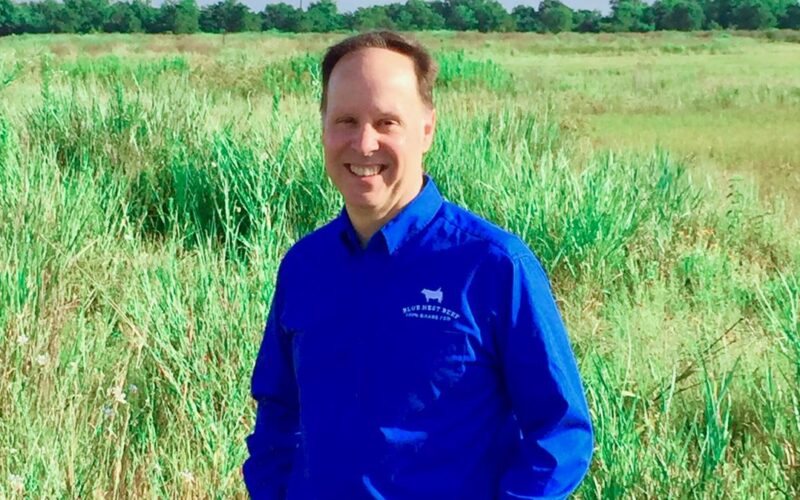
Russ Cosner, co-founder of StandardSoil and BlueNest Beef, talks about the potential of soil carbon in regenerative agriculture, the role of regenerative entrepreneurs and the science behind livestock farming.

Victor Friedberg, 30m available for food moonshots

Victor Friedberg is co-founder of FoodShot Global (www.foodshot.org) a platform catalysing food system innovation. FoodShot is an ecosystem of world-class, mission aligned venture funds, banks, corporate strategic investors, and foundations that provide equity, debt, non-dilutive capital, and industry resources.