Tag: carbon credits

Max Küsters – Why every pioneering regen farm should sell ecosystem services

Gut & Bösel in Alt Madlitz, Brandenburg is one of the largest regenerative farms in Europe — 3,000 hectares of arable land and forestry on some of the sandiest, driest soils in Germany. For years, farmer Benedikt Bösel and his team have been experimenting with agroforestry, holistic grazing, and composting at scale, with no blueprint and no neighbours to learn from. That experimentation costs money, takes time, and generates knowledge that other farmers benefit from for free.

So they set up a foundation next to the farm to do the research properly — 10,000 soil samples, four university partners, climate sensors across 300 hectares, and a carbon credit programme that is already generating revenue. Max Küsters, managing director at Gut & Bösel, talks with Koen about how regenerative farms can start turning their hard-won data and ecosystem restoration work into actual income streams — through carbon markets, biodiversity credits, and eventually the insurance industry, which is slowly waking up to the fact that healthy soil is cheaper than flood damage.

Pablo Francisco Borrelli — Grazing carbon credits: the Trojan horse transforming Argentine grasslands

Argentina has just issued its first grazing-based carbon credits and the story behind them is forty years in the making. Pablo Francisco Borrelli, co-founder of Ruuts, has spent the last decade building the infrastructure to get farmers in Patagonia and beyond paid for what their land is actually doing: sequestering carbon, retaining water, and growing more grass than anyone thought possible.

The carbon credit is not the point. It is the door. Once a farmer steps through it and experiences what holistic management does for their land and their bottom line, the market can disappear and they won’t go back. This is a grounded account of what it takes to turn forty years of agronomic pioneering into a verified, sellable outcome and why the hardest part was never the science.

Anastasia Volkova – Building the world’s largest MRV provider

Regenerative agriculture really works. Data shows that the ability of crops, from planting to harvest, to withstand weather shocks (50-year droughts and floods happening every year, anyone?) correlates very strongly with regenerative agriculture practices. To enable that at scale, MRVs are crucial.

Happy to welcome back on the podcast Anastasia Volkova, co-founder of Regrow Ag, the AI-powered platform to make agriculture resilient, who just made another acquisition. We check in with the MRV pioneer and successful entrepreneur about why they are merging with the leading LATAM player. Last time we talked, five years ago, they had also just merged.
We talk about the current state of the MRV world: who is paying, who isn’t, who is doubling down on remote sensing, and who is investing in resilient agriculture.

What do the current wars everywhere (we are recording this in mid-March ’26, when the Iran war is in full swing) mean for resilient agriculture and the investments needed to unlock it? We also talk- just as we did five years ago- about fertiliser and the double role it plays. In the Global North we can easily cut 70%- yes, 70%- without meaningful yield drops, but in the Global South it’s desperately needed in many places. With the current exploding prices and energy costs, that will be difficult.

We discuss AI and its ability to unlock insights from large (cleaned-up) data sets, and why she is stepping into a more living-systems way of thinking. She’s optimistic that watershed- scale regeneration is almost at our fingertips.

Philip Kauders – From Goldman Sachs to investing hundreds of millions in agroforestry in Brazil

A conversation with Philip Kauders, founder of Courageous Land, working on large-scale reforestation and conservation through agroforestry and meeting the growing demand for climate-positive food, ingredients, high-value hardwoods, and carbon credits.

We can invest hundreds of millions into regenerative agroforestry, maybe even billions. No, we don’t need new regulations or new technology (drones that prune, for example— sure, they’ll help, and they’ll come, but they’re not essential). According to Philip the puzzle pieces for making large scale multi strata agroforestry systems are there. The place: Brazil. The land: the former rainforest which is currently bare or maybe grazed a bit, so underperforming financially and ecologically ecosystems. The knowledge is there because of 10000 years of agroforestry experience- the Amazon is a managed agroforestry system-, the financial system is ready because agroforestry is a thing in Brazil. Companies are sourcing products from these systems, bankers are investing, and large-scale projects are already on the ground.

The missing link? The game changer which might make real scale possible? Carbon credits. I know what you thinking about the voluntary markets and the scandals, but regen agroforestry systems are amazing carbon sinks. And many companies—especially tech giants with high margins—have made massive climate commitments and continue to buy high-quality carbon credits. That demand makes many of these projects investable, bankable and scalable.
Of course, it’s not all rainbows and unicorns—there are plenty of challenges ahead. But the main point is: we know what to do, and we know how to do it. So… what are we waiting for?

Laimonas Noreika – From FinTech to Farms: bridging the €60B loan gap for Europe’s small farms

A conversation with Laimonas Noreika, founder of HeavyFinance, about providing loans to farmers, bringing innovation to the traditionally stagnant agri-loan sector. Regen ag is more profitable—Laimonas has the data to prove it and is putting serious money to work to scale regen across Eastern Europe.

Some numbers: over €70M loaned to farmers and over 13,000 individual investors have invested through them. But the gap is much bigger—over €60B a year—which means we need institutional investors. Some, like the European Investment Fund, have invested through Heavy Finance. And why aren’t banks stepping in? Because small farmers don’t fit their criteria well. So, we need new fintech solutions and scale. This could be quite a standard fintech play in agriculture if it weren’t for a super clear focus on regenerative practices. Why? Because it’s more profitable and thus makes farmers better lenders.

And yes, we’re also talking about carbon credits—Laimonas is placing big bets in that space, and we explore why and how.

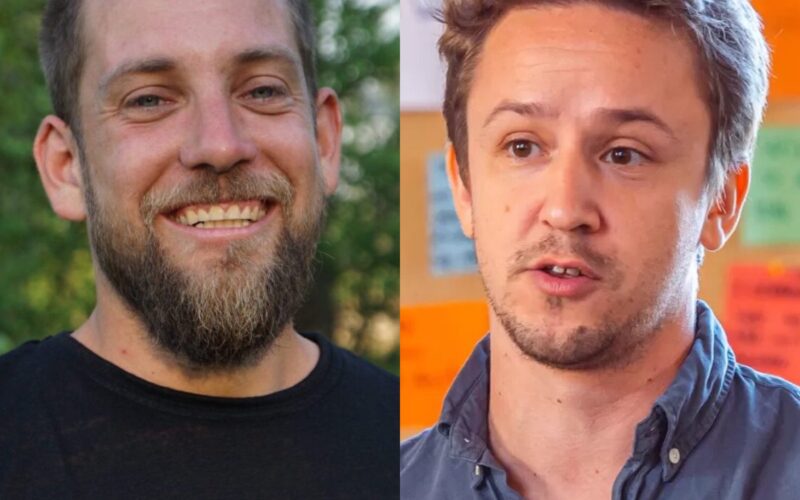
Ivo Degn and Philippe Birker – Does a low interest, 3,5% on $2,5 million loan, really qualify as a regenerative investment?

A conversation with Ivo Degn and Philippe Birker, founders of Climate Farmers, about the reason why they picked carbon credits as the first business to focus on, how they recently raised $2,5 million in a very unusual way, at least for a startup, what they consider a regenerative investment and much more.

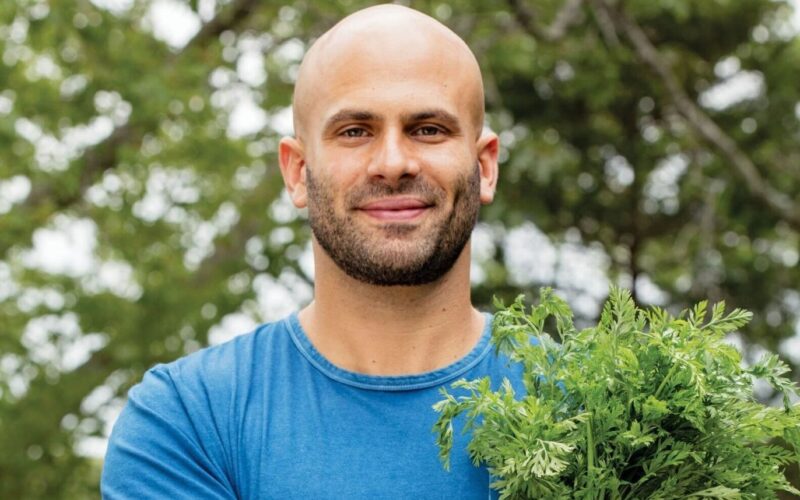
Sam Kass – Get people access to carrots before talking about nutrient density, former Obama’s chef and nutrition advisor turned investor says

A conversation with Sam Kass, former White House Chef and Senior Policy Advisor for Nutrition of the Obama’s administration and partner at Acre VC. We talk about the potential of VC in the space, the challenges of the real world and why we should focus on getting everyone access to carrots before focusing on the quality and growing practices, why carbon payments is a very interesting and real entry point to scale, and more.

Soil Builders, regenerative agroforestry on Hawaii and soil carbon credits in Australia

What regenerative agriculture looks like with bread fruit in Hawaii and Bert Glover of Impact Ag Partners shares their part in the soil carbon credit deal with Microsoft and an Australian rancher.

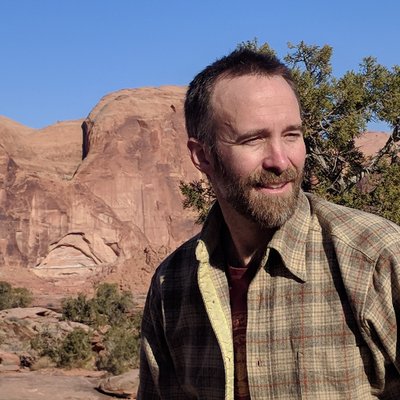
Christian Shearer on selling 100,000 soil carbon credits to Microsoft on the blockchain

How did Regen Network sell 100,000 soil carbon credits to a giant company like Microsoft? Moreover, why did Regen Network decide not to build on top of Ethereum? An interesting conversation with Christian Shearer, CEO of Regen Network and the Co-Founder of Terra Genesis International.