Tag: capital

Martin Reiter – Building a $100B home for regenerative brands

We need to build a 100b conglomerate of regenerative brands, good for you and good for the planet.
What is needed to truly move the needle on health? Create more research, more trials on nutrient density, more advocacy? Or, as Martin Reiter, founder of RARE argues, create the next regen Nestlé or Unilever: a 100 billion (yes, that’s a B) regenerative consumer goods conglomerate, with only better-for-you and better-for-the-planet brands. The demand is there; the current incumbents are unable to innovate in regen, as they are built on chemical ingredients.

The story usually goes like this: a group of people sets up a food (or cosmetics) brand that is better for you and better for the planet. Much better ingredients, honest sourcing, actually healthy, not UPF, etc. Then they need some money and raise funds, keep building, scaling, and at some point, 10–15 years down the road, the founders get tired and want to take some money off the table. and their existing investors need to get out and return money to their LPs.

Currently, their only option is to sell to an incumbent, which then unfortunately usually screws it up. They start tweaking the ingredients, squeezing farmer margins, etc. The original founders leave after a few frustrating years.
Is there a better way? A permanent home for regen, good-for-you, good-for-the-planet brands? A regen Nestlé or Unilever, if you will?

Matt Schmitt – How to make regenerative food and agriculture bankable

A conversation with Matt Schmitt, founder of Structure Climate, about how to get institutional investors invest in the regenerative food and agriculture transitions. These are big terms we use regularly, but what do they actually mean and, more importantly, how do we get there? How do we get novel climate technologies- like biochar machinery, chestnut agroforestry systems, biofertilizer plants, or weeding robots- bankable? Novel technologies often start as luxury goods with a clear customer demand, even if they don’t yet have many existing transactions, just very clear customer interest.
How do we make these technologies investable, or at least recognisable, by major financial institutions (like the big, “boring” banks, insurance companies, and pension funds). We need billions and trillions to flow to the soil. So, how do we get these asset managers over time to start financing this seriously, in the same way they do solar projects or sustainable real estate?

How does a capital stack for a novel technology look like, and how do we financially engineer it with creativity—the good kind, not the kind that caused financial crises in the past decades? To roll these technologies out across farms and landscapes, we need scalable solutions. While commodification in food and agriculture has a bad reputation, turning enabling technologies into bankable commodities can be a good thing. It helps farmers adopt systems that hold more complexity and resilience on their land.

Laura Ortiz Montemayor – Ecology without social justice is just gardening

A conversation with Laura Ortiz Montemayor, Chief Purpose Officer and co-founder of SVX Mexico, and managing partner at Regenera Ventures Fund, covering the global nature of regeneration exploring what has been happening in Mexico and the rest of the Spanish-speaking countries in LATAM. They hold the key to many of our biodiversity challenges, and many tropical or subtropical commodities are farmed there. What has Laura learnt since the last time we spoke three years ago? Why did she decide to start a $20 million fund focused on rural Mexico and the regenerative transition?

Inspired by thinkers like John Fullerton and Carol Sanford, Laura champions soil health and living systems thinking, reframing biodiversity as a critical asset rather than a charity case and critiques profit-driven economic models that overlook natural and social resources, advocating for a shift towards valuing ecosystems’ inherent richness. Highlighting Latin America’s role in climate resilience, we discuss indigenous wisdom, regional nuances, and innovative finance strategies blending social justice with ecology. As plans emerge for a second fund in Mexico and Colombia, Laura calls for bold investment in nature-based solutions to rejuvenate food systems and biodiversity.

Emma Fuller – Making soulless capital who doesn’t care about regenerative agriculture invest in it

A conversation with Emma Fuller, co-founder of Fractal, about the transition to regenerative practices or outcomes of the millions of acres of broad-acre row cropping, corn, soy, and wheat in the US, Brazil, Argentina. Fractal provides farmers with equity financing by investing alongside them in their farmland to fund their growth.

Growing Regenerative Opportunities – Koen van Seijen interviewed by John Kempf

A very special episode: Koen van Seijen, author and host of the Investing in Regenerative Agriculture and Food podcast, interviewed by John Kempf, the founder of Advancing Eco Agriculture (AEA) and a top expert in biological and regenerative farming. 

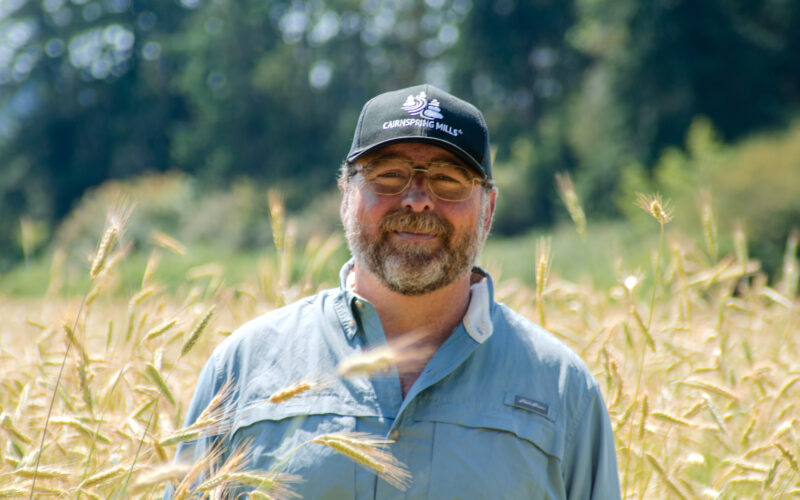
Kevin Morse – Flour, flavour and nutrients, how a back to the future mill changes everything for wheat farmers

A conversation with Kevin Morse, cofounder and CEO of Cairnspring Mills, about the fascinating world of grain, wheat and the little secret of flour, building a new Back to the Future mill, and much more.

Cate Havstad-Casad – Why are we okay in wearing fossil fuel, oil-based clothes on our bodies?

A conversation with Cate Havstad-Casad, farmer rancher on a regenerative farm in central Oregon, designer and food system activist, about how the fibres of the clothes we wear every day are made of petroleum or are coated in plastics and other petroleum chemicals.

Bart van der Zande – Thanks to the learning of the 1st, the world 1st regenerative venture studio gets ready for the 2nd cohort

A check-in interview with Bart van der Zande of Fresh Ventures Studio, a venture studio specifically focussed on building regenerative businesses, about how the first program went, the companies they are building, and what they are doing differently with the upcoming cohort.

Pete Oberle on how to invest in lab grown regenerative meat

Pete Oberle, managing partner of Trailhead Capital, shares about his journey into investing and the latest investments they have made. Among them there is a regenerative cultivated lab-grown meat company.

Stephen Hohenrieder on investing in mature food companies and help them go further and deeper

Stephen Hohenrieder, founder of Grounded Capital Partners, joins us to discuss a different approach to capital—by treating the symptoms of an unhealthy system rather than incentivizing them.