Category: Investor Stories

Tania Rodriguez Riestra – Systems change investing done right

The food, agriculture and planetary systems, for that matter, are all in serious need of change. No news there.
But how? Individual investments and grants, however large, will never be big enough to move these systems. What we need is a serious, deep analysis of the food and agriculture space within a certain context: hundreds of hours of interviews with many stakeholders to map the players, the positive and negative feedback loops, and the intervention points with huge leverage (or not), trying to make sense of the messiness of a system. No, a map is never the territory, but it’s better than no map.

Then what? How do we go from mapping to action? It is key to build dedicated funding vehicles for-profit, low-return, no-return, philanthropy, the whole capital spectrum concentrated on the highest leverage points in a system. And then, and only then, we might have a chance to move something.

CO_ is one of the most interesting regen investment vehicles we have come across, combining deep systems research with long-term, on-the-ground work, weaving until you have a common vision, and then deploying serious capital to make it work.

This is a long conversation where we walk and talk, with some dogs and helicopter noise and butterflies too. We talk water, landscape-scale regeneration, investing in the Global North and South, investor mindsets, relationship to wealth, what is enough, inequality, biodiversity hotspot research and funding, equity vs. debt, and why whales will be on investment committees soon.

What we learned in 2025 about making regen bankable, animals, water, chefs, scale, Al in ag, agroforestry, education, food as medicine, ROl, storytelling

If 2025 had a soundtrack, it would be the sound of stress: stress in the system, stress in humans, stress in animals and in all other non human beings.

And then the cycle of Heat. Drought. Fire. Flood. Over and over again.
And yet, between the headlines, something else seems happening. We spent the year in conversation—with farmers walking their fields, scientists questioning old assumptions, investors rethinking risk, and builders experimenting in the real world. Online and offline, we found ourselves in rooms where regeneration wasn’t an abstract ideal, but really happening.

As 2025 comes to a close, it’s hard not to feel cautiously optimistic. The signals are there. Regeneration works and the direction is becoming clearer.

Rasmus Nørgaard – From bricks to soil: rethinking real estate from the ground up

We all have a roof over our heads and a bed to sleep in if we’re lucky. And if we’re unlucky- which most of us with homes actually are- we spend a significant portion of our monthly budget on housing. This is only increasing: the size of houses, the cost of rents, and mortgages, especially in highly sought-after cities. As a result, many people are left with less budget for high-quality regenerative food. This situation isn’t sustainable, economically or socially, especially given that the building sector is incredibly wasteful and consumes vast amounts of fossil fuels.

Straight from Copenhagen, a conversation with Rasmus Nørgaard, co-founder of Urban Partners, Home.Earth and Nordhus , with over two decades of experience in real estate, pushing the boundaries of sustainability within conventional systems. With Rasmus we dive deep into the world of real estate. Not “real assets” (although buildings are assets), but the actual built environment: homes, concrete, steel, and hopefully a lot more wood in the future. The built environment is one of the three major sectors that needs a complete systems change, alongside with agrifood and energy.

So, what can we in the regenerative agriculture and food sector learn from one of the pioneers of sustainable real estate? Rasmus is building a much more holistic (dare we say Horizon 3?) for-profit company that is reinventing real estate from the ground up. And he’s convinced: long-term real estate companies like this will prove more profitable, even financially, than those driven by short-term thinking. Yes, we talk a lot about buildings and homes, but there are so many overlaps with agriculture and food. Let’s face it: soil is a real asset in investment terms.
We ought to learn from the best in real estate to bring more aligned capital into the ground fast.
In the end, it’s all about aligning incentives and creating the right structures to build things that last.

Béla Hatvany – Born in 1938, now thinking AI, enoughness, precision fermentation and building a care economy

A conversation with Béla Hatvany, pioneering entrepreneur in the automation of libraries and the information industry, born in 1938, turned into angel investor and philanthropist, on his journey, what’s enough, the role of AI and EI (empathetic intelligence), and the potential of precision fermentation.

Bela and his wife Ellen founded in 2011 Mustardseed Trust, a charity with the vision of a world in which all beings live in partnership with the web of life for all to thrive. Mustardseed Trust, which has been steadfastly supporting a variety of organisations and individuals across the globe and focusing on Care Economy and Regenerative Food Systems, is winding-up its operation this June.

Fernando Russo – From selling Playboy’s to growing coffee, cacao, credit and lots of cows

A deep dive conversation with Fernando Russo about the reasons why he is going deep into coffee and cacao without being a coffee drinker and how he turned from being a Playboy’s salesman and a travel entrepreneur to an impact investor in the regenerative agriculture and food. We also talk about fashion and heights, the Amazon, deforestation, reforestation, the role of cattle—the good, the bad, and the ugly—and, of course, the potential and why he is in the water camp, not the carbon camp.

What is driving one of the most active impacts investors in the regenerative space? What Fernando tells fellow impact investors when they ask him about this regen thing?
Getting credit and other finance into the hands of farmers and land stewards who want and can change is way more important. Let’s get to work.

Paul McMahon – With over $500M invested, there is a regenerative edge of about 1-3%

A conversation with Paul McMahon, co-founder of SLM, about why it makes so much sense to put money to work in real regenerative agriculture, yields, and more importantly, profits and the regenerative edge, and more.

Few papers in regenerative agriculture have been shared more than the Investment Case for Ecological Agriculture written by Paul McMahon. We have shared it countless times, learned a whole lot from the simple investment terms describing why it makes so much sense to put money to work in real regeneration. Now it has been updated, even better, it has been completely rewritten and with a lot more science and a lot more experience from the field.

In the conversation with one of the most experienced regenerative farmland investors, we explore the modules of our recent video course on why we need to change agriculture and food systems urgently, and why now is the time to do it.
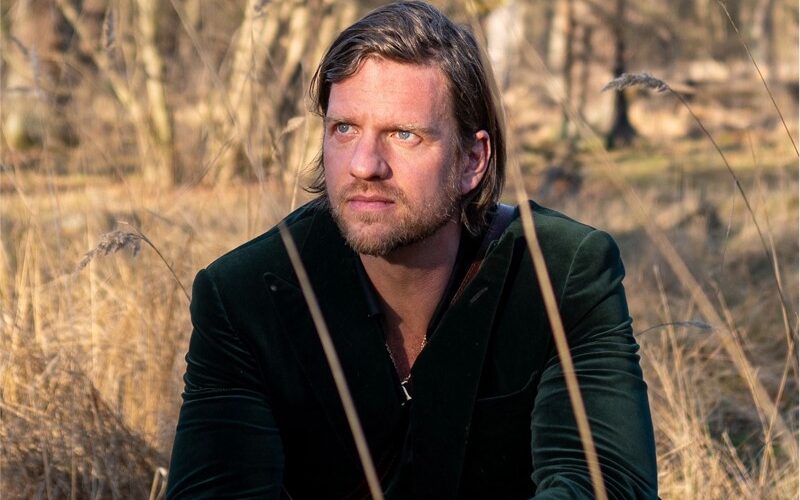
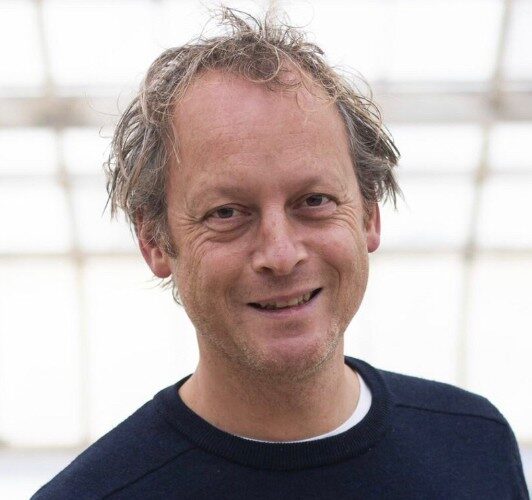
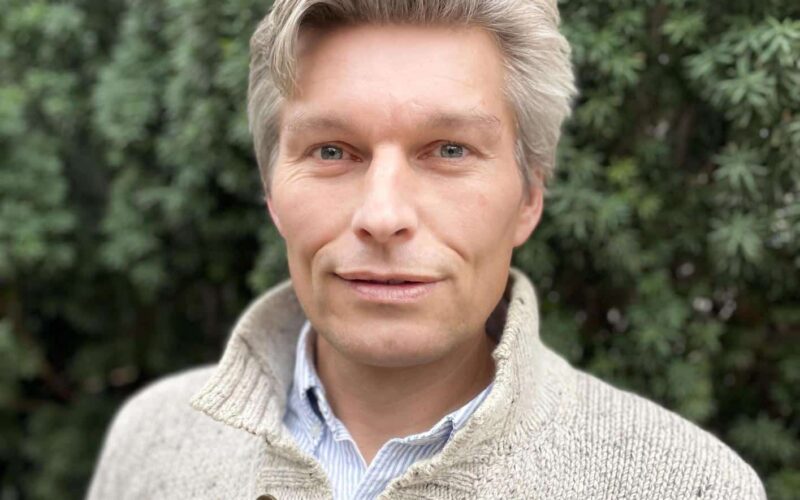
Martin Reiter – Why regen hasn’t produced Steve Jobs yet and how to build a modern Nestlé

A conversation with Martin Reiter, former senior manager at Airbnb and Wayfair, and prior to this at McKinsey and Groupon, about what excites him about regeneration, where are the Steve Jobs and Elon Musk of regenerative agriculture going to build companies, and how can we help more talent flow into the space?

Randal Breen – How a first generation farmer uses holistic investment to double the farm

A conversation with Randal Breen, a first-generation farmer in Australia who managed to double their farm with a very innovative financing structure. We talk about investing holistically, non-flexible lease, ecological and social debt payments and more.

Brandon Welch and Phil Taylor – Updates with Mad Capital on how to enable billions to flow to regen organic farmers

A check-in conversation with Brandon Welch and Phil Taylor, founders of Mad Capital and Mad Agriculture, to talk about Perennial Fund 1 and 2, the lessons learned and building the vehicles to finance transition and funnel billions into the space.

Yanniek Schoonhoven – Training the next generation of farmers with an academy and regenerative farm of 1100HA

A conversation with Yanniek Schoonhoven, co-founder of the Regeneration Academy, a physical learning hub and model farm in the South of Spain, about building a space and community to become practitioners, entrepreneurs, innovators and leaders in the field of regenerative agriculture and eco-system restoration, specialized in semi-arid areas.