Tag: forests

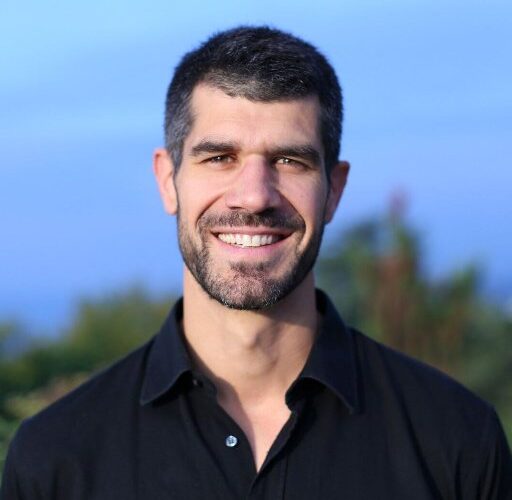
Stef van Dongen – Trees don’t send invoices so a Catalan valley is rewiring water, forests and finance

 From the Muga Valley, one of the largest watershed regeneration projects we know, we talk with Stef van Dongen, founder of The Pioneers of Our Time about nature credits, taking into consideration water, carbon biodiversity, regenerative forest management, but most importantly, how to build trust again between communities living in the valley, trust between people living there, but also with local and regional authority.

This is a region which if there isn’t a strong series of interventions over the next years, most likely will be hit by a massive forest fire, which will burn all the way to Basque country. And slowly that sense of urgency is landing. What is needed is a lot of experiments and then a lot of public private partnerships, which is easier said than done, but it seems to be going really fast in this landscape, and we try to find out why.

We talk about why the small water cycle restoration space is still not really landing with people, policy makers, investors, entrepreneurs, and what to do about it.

Sitting at the fireplace we trace how neighbors who barely spoke began phoning across ridgelines, how tourism money are flowing uphill to fund forest work, and how a dense, abandoned woodland started opening into a living mosaic that holds water, softens fire, and invites wildlife back. 

We walk through the mechanics of a cost-based climate credit that pays for what a hectare truly needs over 15 years measured across water, carbon, biodiversity, and fire safety. It’s a public–private framework that the regional government helps certify: pilots sold out, and a thousand credits are now in sight as the valley scales from dozens to thousands of hectares, all within a 40,000-hectare fire prevention plan designed to be holistic from day one.

WATERSHED GOVERNANCE AND SCALING UP

The conversation goes deeper into governance and replication. How do you manage a watershed you don’t own? Start with trust, map the layers- forest, water, biodiversity, agriculture, economy- and build a campus where scientists, foresters, and investors can monitor, learn, and iterate. We compare desalination’s billion-euro price tags to the cheaper, cleaner gains from soil sponge restoration. We talk predators and grazers, “green deserts” and beavers, and the hard pivot from carbon-speak to water security, a narrative that resonates across politics because everyone needs a shower, a harvest, and a forest that won’t explode each summer.

The discussion outlines a visionary approach to managing the landscape through a new governance model based on watershed boundaries rather than political ones. This involves creating collaborative systems between public, private, and civil society actors to enable work at the necessary scale for ecological and climate impact.

“We’re working towards a bioregional governance system, so having the watershed as basically a unit of governance which then will be the foundation for society and economy and ecology.” – Stef van Dongen

WATER AS THE KEY TO CLIMATE RESILIENCE

The narrative positions water security as the central, tangible manifestation of the climate crisis in the region, making it a powerful and apolitical focal point for action. Restoring the watershed’s natural water cycles is framed as the core strategy for building resilience against drought, fire, and social instability.

“Water is the manifestation of the climate crisis we have, especially in the Mediterranean. What do you see? Forest fires and floods. Where do functional watersheds come from? Because the sponge where the forest is drying out and turns into fire.” – Stef van Dongen

THE POWER OF COMMUNITY FESTIVALS

The Muga local festival has evolved into a cross-village event, serving as a catalyst for connection and community engagement. It demonstrates how such gatherings rebuild social fabric and empower residents to advocate for their needs.

“Yesterday there was a hunter here, and he said he got a phone call from Tarara, which is two villages upstream from the Muga, and he was really surprised […] They asked specific questions, and he said that this is because of the festival. Because now the festival is growing into a festival of three villages, […] and people start to speak with each other andstart relating to each other.” – Stef van Dongen

BUILDING TRUST IN THE MUGA VALLEY

A foundational element of the work in the valley has been intentionally developing trust and relationships among villagers and between villages, where previously there was little communication or cooperation. This deliberate effort is seen as essential for any long-term, collective action.

“We’ve been investing a lot of time and effort and also resources in building trust and relationships between people and identifying what are really the hopes and the wishes, but also the fears of people.” – Stef van Dongen

OTHER POINTS DISCUSSED

Koen and Stef also talked about:

  • Wildlife reintroduction
  • Nature credit mechanisms
  • Agricultural challenges and tensions

LINKS:

LINKED INTERVIEWS:

——————————————

Feedback, comments, suggestions? Reach me via Twitter @KoenvanSeijen, in the comments below or through Get in Touch on this website.

Join the Investing in Regenerative Agriculture and Food newsletter on www.eepurl.com/cxU33P

The above references an opinion and is for information and educational purposes only. It is not intended to be investment advice. Seek a duly licensed professional for investment advice.

Douglas Sheil – Why fixing water fixes carbon

Wow, it seems so simple: healthy forests bring in and trigger their own rain. But, since most rain comes from elsewhere, shouldn’t we be more interested in this “elsewhere”? Why aren’t farmers, investors, entrepreneurs, and policymakers in agriculture, forestry, and land use more engaged with this bigger picture? For example, if China realises that most of its rainfall comes from beyond its Western borders- even as far as Europe. would they get involved in restoring farms and forests all the way to Europe? Big ideas. And you could argue: it doesn’t get much bigger than this.

Yes, we’re talking again about water cycles and this time with Douglas Sheil, Professor of Forest Ecology and Forest Management at Wageningen University, one of the most famous agricultural universities in the world. Why has it been so difficult to get scientific discoveries, like the biotic pump theory in physics, to enter other fields like climate science and forestry? We talk about the huge pushback biotic pump scientists have faced in publishing papers and gaining recognition over the past 20 years.

But we also talk about optimism, why water is a much easier sell than carbon, and how it could spark far more cross-border cooperation. Still, to make it work, we need to think big and get much better at working together, which is no easy feat. It’s a wide-ranging conversation on tropical forests, science, the Sahel, natural regeneration, and politics.

Antonio Nobre – If nature were a bank it would have been saved already

A conversation with Antonio Nobre, Brazilian agronomist by training and world’s leading Earth scientist, serving as the scientific director of the Biotic Pump Greening Group. He has dedicated his career to studying the Amazon’s ecological dynamics and its crucial role in climate regulation and is an expert on water cycles, native Indigenous knowledge, and much more.

We talk about how Antonio found his way to the Amazon after being born and raised in São Paulo, how he rebelled against the Green Revolution during his time at agricultural university, and how he discovered the incredible workings of forests—especially rainforests.
We also explore the overview effect—the transformative experience of seeing Earth from space—and how it often turns astronauts into environmental activists.

What we learned in 2023 about cooling the planet, food as medicine, regenerative renaissance, indigenous knowledge and decommodification

As we are wrapping up 2023 we look back at a year which feels even crazier than 2022. Another war has started and we have been flooded literally with extreme weather events. Every month seems to have been the warmest, driest, wettest etc. in history! Let’s look at what we covered and learned in the podcast!

Anastassia Makarieva – Healthy forests invest their capital to create their own rain

A conversation with Anastassia Makarieva, researcher at the Petersburg Nuclear Physics Institute and with a fellowship at the University of Munich, about how healthy ecosystems, and specifically healthy forests, regulate moisture and thus rain. We discuss tipping points and where to look for wet spots even in very dry landscapes.

Alpha Lo – What if water is more important than carbon

A conversation with Alpha Lo, physicist and writer of the Climate Water Project, about the importance of slowing water down, the connection between drought, fire, and floods, and the massive role water plays in heating and cooling our planet.

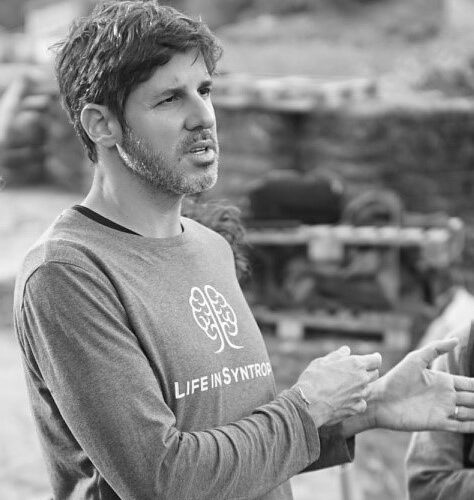
Felipe Pasini – Trees bring water so when in doubt plant more trees and complexify

Felipe Pasini, the co-founder of Life in Syntropy, joins us to discuss the astounding capabilities of systemic tree planting coupled with many other agroforestry systems and the role of syntropic agroforestry in gaining back the forests we once had.

Walter Jehne – Stop talking about carbon emissions and focus on restoring the water cycle

An episode about the impact of regeneration on cooling the climate with Walter Jehne, forester and agricultural scientist specialising in soil microbial ecology of plant diseases, nutrition, and land regeneration.

Bastien Sachet, how Nestlè and Ferrero are decommodifying their supply chains

An interview with Bastien Sachet, CEO of The Earthworm Foundation. A dive deep into the importance of managing forests and soils. The key is a humble approach for large brands and commodity buyers as they need a more holistic view to shift from extractive to regenerative.

Sean Kidney on the $100 trillion bond market everyone in regen ag should know about

Sean Kidney, CEO and co-founder of the Climate Bonds Initiative, on the $100 trillion bond market everyone in regenerative ag and food should know about.