Tag: grazing

Pablo Francisco Borrelli — Grazing carbon credits: the Trojan horse transforming Argentine grasslands

Argentina has just issued its first grazing-based carbon credits and the story behind them is forty years in the making. Pablo Francisco Borrelli, co-founder of Ruuts, has spent the last decade building the infrastructure to get farmers in Patagonia and beyond paid for what their land is actually doing: sequestering carbon, retaining water, and growing more grass than anyone thought possible.

The carbon credit is not the point. It is the door. Once a farmer steps through it and experiences what holistic management does for their land and their bottom line, the market can disappear and they won’t go back. This is a grounded account of what it takes to turn forty years of agronomic pioneering into a verified, sellable outcome and why the hardest part was never the science.

Joe Tomandl – CAFOs have caught up, can regenerative dairy still win?

We are at an interesting moment in the dairy sector. For years, smaller farmers with around 200 cows, who were also great graziers, could undercut the costs of large concentrated dairy operations, keeping costs low, taking healthy margins in good years, and surviving the bad ones.

But something has changed: CAFO dairies have grown bigger and bigger (10,000 cows is now normal, and 100,000 is no longer an exception) and their economies of scale mean they are undercutting the grazers. Of course, this leads to massive manure lagoons, animal welfare disasters, and all kinds of other externalities, but nobody is paying for that yet. Not to mention that you can only push biology so far before it literally breaks.

So what’s next for regenerative grazing? Joe Tomandl, 4th generation dairy farmer, founder and director of the Dairy Grazing Alliance, argues instead for focusing on the transition of mid-size farms with 300– 700 cows that have surrounding land which could be grazed but currently isn’t. You need grazing experience and a long-term offtake agreement, but it can be done.

And what about nutrient density and quality? What’s good enough in terms of grass-fed,  50% on grass or 70%? We talk decentralised processing, consumers who are waking up to where their food comes from, and the huge fragility and risks of a super-centralised, heavily indebted system. Enjoy this deep dive into dairy, regenerative, grazing-based dairy in the US!

Marco Carbonara – Using 10 species of animals to profitably regenerate 100 hectares of forgotten Italian land between Rome and Florence

A conversation with Marco Carbonara, cofounder, owner and farmer at Pulicaro Farm, in Lazio, Italy. A special early morning walk through permanent pasture surrounded by multispecies graziers, donkeys, cows, sheep, goats, chickens and, of course, some guard dogs, which means a lot of pleasant and present background sounds. We are in the hills between Rome and Florence and have the great pleasure to visit the farm of Marco and Chiara. Marco takes us on the morning walk to feel, smell, and see regeneration of permanent pastures in a Mediterranean landscape. Definitely not easy, but definitely possible, and yes, also profitable.

How did Marco, who had no farming experience 20 years ago, approach regeneration back then, and how does he approach it now? When they take on new lands, what are the first steps, and how much has he learned over the last 20 years? What is the role of animals in regenerating the Mediterranean landscape, and how does he handle the challenging balance between running a company, needing to break even, and wanting to regenerate as quickly as possible?

We also discuss the challenge of feed: is it okay to bring feed for the non-ruminants in your rotation from outside the farm when your soils can’t yet sustain needy plants like wheat, barley, etc.? And if it is, how do you deal with the challenge of potentially competing for human food? We only scratched the surface because it’s impossible to capture 20years of deep regeneration in just one hour, but we tried and we hope you enjoyed listening to it as much as we did recording it.

Henk Mooiweer – If you can get paid now by Nestlé, Shell and Microsoft to change grazing practices, why wait?

A conversation with Henk Mooiweer, co-founder of Grassroots Carbon, about the current state of carbon markets, high quality soil carbon removal credits, how this company manage to sell 5 million dollars’ worth of them, and where the market is going. Why did Nestlé, Microsoft and Shell start buying? Why does Henk argue that now is the time to sign up as a rancher and not wait to sell your carbon later? Where is the science in all this regen grazing? What about methane? And why is this actually not about carbon?

Chris Bloomfield and Daniel Reisman – We need animals outside to feed the planet sustainably

A conversation with Chris Bloomfield and Daniel Reisman, co-founders of Collie, a provider of virtual cow guidance system for managing production in grazing, about enabling regenerative dairy, how virtually fencing and cow guidance drastically reduce labour and boost production. To feed ourselves and the planet sustainably, we need to include animals as part of agriculture. We dive deep into going from vegan to grazing, animal welfare, and the state of our planet. How do we enable more farmers to hold complexity on their farms? How do we use technology to enable complexity instead of using technology to make everything mono, as we have done in the last 50 years?


Peter Byck – Roots So Deep (you can see the devil down there)

A conversation with Peter Byck, filmmaker and a wrangler of scientists, about regenerative vs conventional grazing and his new 4 part documentary series Roots So Deep (you can see the devil down there).

Johannes Scheibe on using carbon credits to transition from understocked and overgrazed to zero input grazing

A conversation with Johannes Scheibe, founder of Ruumi, a satellite grazing app, about financing land regeneration and how Ruumi works with farmers and companies to create the conditions for a better future.

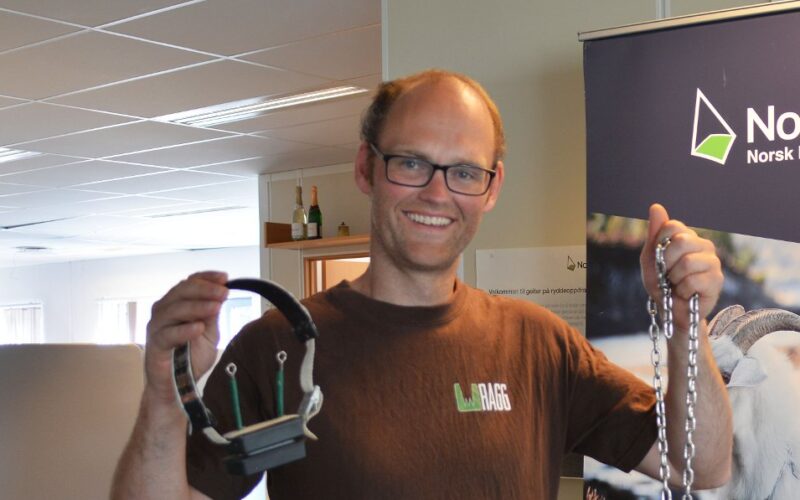
Oscar Hovde Berntsen on how a global leader in virtual fencing comes from a tiny Norwegian town

Oscar Hovde Bernstern, founder and CTO of NoFence, shares the numerous reasons why virtual fencing is big right now in Norway, and soon, all over the world.

Frank Wooten on how virtual fencing unlocks the potential of carbon positive grazing at scale

An episode with Frank Wooten, CEO and founder of Vence, a reinvented livestock production that centers in virtual fencing and autonomous animal control. Vence’s mission is to lower the price and to increase the availability of sustainable animal protein around the world.