Search results for: nutrient density

Farm data, nutrient density and biodiversity: who owns the value farmers create? Live @Groundswell ’26

Recorded in person at Groundswell, the UK’s largest regenerative agriculture festival, held each summer in Hertfordshire, this is a 55-minute panel session moderated by Koen van Seijen, bringing together four practitioners who spend their working lives at the intersection of farm data, investment, soil science, and biodiversity monitoring. The question on the table: who actually benefits when data is collected from farms? And is the answer changing?

The four panellists: Ichsani Wheeler, a soil scientist who grew up in permaculture and now uses open-source satellite data and AI to map soil carbon and gross primary productivity at 30-metre resolution across the globe; Benedikt Bösel, farmer of a 1,000-hectare arable and 2,000-hectare forestry operation in eastern Brandenburg, Germany, who has been running a full digital twin of his farm alongside the physical operation; Antony Yousefian, co-founder of The First Thirty — a reference to the first thirty centimetres of soil — an investment firm focused on the infrastructure needed to turn farms into preventative healthcare systems; and Matthijs Westerwoudt, co-founder of Wilder Land, who is building what he describes as a Strava for biodiversity, using AI-powered acoustic monitoring to give farmers real-time data on the birds, bats, and insects living on their land.

In this session, opened with a recording of birdsong from a regenerative farm in the Netherlands played to the 9am audience, the conversation moves from remote sensing and registry projects to the £30,000 value the NHS places on a single quality-adjusted life year (QALY), from the danger of farm data being used to set geographically-based input pricing against the farmer who generated it, to the moment Benedikt’s doctor told him she had never seen iron levels like his wife’s after giving birth, and why only 4% of his customers scanned the QR code that would have told them everything about the specific cow whose meat they were eating.

Eric Smith – Why nutrient density data is changing everything we know about food and farming

Eric Smith is the founder of Edacious, a company building the infrastructure to make food quality and nutrient density measurable, objective and comparable. After spending years building a nutrition-testing platform capable of measuring macronutrients, micronutrients, bioactives and phytochemicals, alongside the benchmarks and data systems needed to make those measurements useful, he returns to sit down with us to share what they have been building, how the field of nutritional testing has evolved, and the critical insights they have uncovered.

At the heart of Eric’s work is a simple belief:  if consumers can access and verify the quality of their food, they will demand products grown in ways that prioritize soil health and regenerative practices. This increased market demand will structurally direct more money into the pockets of farmers and land stewards, enabling them to expand regenerative agriculture across more hectares, creating a self-sustaining loop of human and ecological health. To ground this concept in science, Edacious leverages the GEM framework—Genetics x Environment x Management practice = Nutrition instead of Yield—moving beyond subjective labels to deliver objective, verified data.

This episode is a deep, down-to-earth dive into the nuts and bolts of quality, nutrient density, and systemic agricultural change. Eric teases the science behind Edacious’ preeminent nutrition lab, which has processed over 6,000 food samples and generated nearly a million analytical data points. The conversation exposes the compromises of industrial crop breeding through the story of carrots, compares apples to apples, reveals the massive nutritional differences hidden in the skins of produce, and explores how Eric’s own eating habits have transformed since he gained direct access to the data, including a surprising advocacy for frozen food and ancient grains.

Dan Kittredge – Local, regenerative and organic have no connection to nutrient density, soil health does

A long-overdue check-in interview with Dan Kittredge, founder of the Bionutrient Food Association. We discuss their involvement in the revolutionary beef study, all the research they have been doing and where they have been showing absolutely no connection between the labels, local, organic, regenerative, farmer’s market, etc., and nutrient density.

What has been shown is a correlation between soil health and nutrient density. All the claims about regenerative agriculture that leads to more nutrient-dense food, they are only true if it leads to healthier soil, and in some or many cases, it actually doesn’t. It all starts with the soil. Plus, very interestingly, the potential of nutrient density: most of the crops they researched scored very very poor compared to what they could have scored. The pessimist would say: look at the empty crops we are eating depleted of nutrients, the realist would say look at the amazing potential. Crops could be (on certain aspects) 10x or 20x more nutrient dense. Let’s get to work!

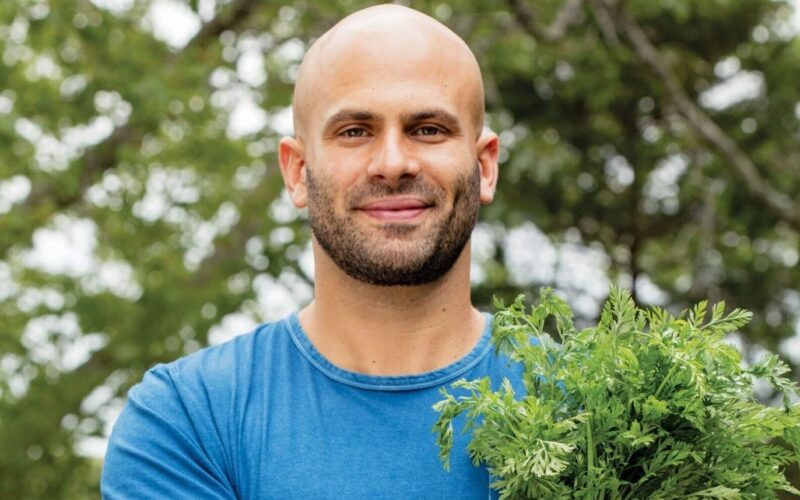
Sam Kass – Get people access to carrots before talking about nutrient density, former Obama’s chef and nutrition advisor turned investor says

A conversation with Sam Kass, former White House Chef and Senior Policy Advisor for Nutrition of the Obama’s administration and partner at Acre VC. We talk about the potential of VC in the space, the challenges of the real world and why we should focus on getting everyone access to carrots before focusing on the quality and growing practices, why carbon payments is a very interesting and real entry point to scale, and more.

Eric Jackson – Want to work on nutrient density? Start with animal protein

A conversation with Eric Jackson, board chair of BioNutrient Food Association, about nutrient density, the research, the practical implication, soil carbon credits, cell-based and plant-based meat replacements and more.

What we learned in 2022 about nutrient density in food, farmers’ philosophy, enabling technologies and satellites and redesigning products

Wow! What a year it has been. Just when you thought things couldn’t get any crazier we find ourselves in a war in Europe, crazy energy and food prices and extreme high inflation rates in general. 

In an ideal world farms applying regenerative practises are more resilient, but as we saw with the story of Josh Heyneke, founder of Parc Carreg, farms can get into trouble very quickly when input prices spike (in this case organic grain from Ukraine to feed the ducks). It seems like Josh and his partner Abigail will make it through the winter and are building hard on their more resilient future, which will include climate neutral eggs!

With this post we wrap up the year and we look forward to regenerating more soils and many more hectares in 2023 and beyond!

Zuzanna Zielińska – Women’s hormonal health starts with regenerative agriculture and the focus on quality and nutrient density food

A conversation with Zuzanna Zielińska, founder of Harvest Care, about women’s hormonal health, the PCOS syndrome, and the connection between regenerative agriculture and healthcare.  She is one of the co-founders of the Coalition of Health Professionals for Regenerative Agriculture.

Mellany Klompe, leading regen farmer going all in on nutrient density

A conversation with Mellany Klompe, the Co-founder of Soil Heroes and the Director of the Soil Heroes Foundation about how measuring nutrient density is key towards having farmers as well as consumers on board with regenerative transition.

Jill Clapperton, a 25 years learning journey on nutrient density, healthy soils, food and people

Co-founder of Rhizoterra Inc. and scientific advisor of chef Dan Barber, Jill Clapperton has been focussed on the connection between healthy soils, healthy food and healthy people for the last 25 years.