Tag: agroforestry

Douglas Sheil – Why fixing water fixes carbon

Wow, it seems so simple: healthy forests bring in and trigger their own rain. But, since most rain comes from elsewhere, shouldn’t we be more interested in this “elsewhere”? Why aren’t farmers, investors, entrepreneurs, and policymakers in agriculture, forestry, and land use more engaged with this bigger picture? For example, if China realises that most of its rainfall comes from beyond its Western borders- even as far as Europe. would they get involved in restoring farms and forests all the way to Europe? Big ideas. And you could argue: it doesn’t get much bigger than this.

Yes, we’re talking again about water cycles and this time with Douglas Sheil, Professor of Forest Ecology and Forest Management at Wageningen University, one of the most famous agricultural universities in the world. Why has it been so difficult to get scientific discoveries, like the biotic pump theory in physics, to enter other fields like climate science and forestry? We talk about the huge pushback biotic pump scientists have faced in publishing papers and gaining recognition over the past 20 years.

But we also talk about optimism, why water is a much easier sell than carbon, and how it could spark far more cross-border cooperation. Still, to make it work, we need to think big and get much better at working together, which is no easy feat. It’s a wide-ranging conversation on tropical forests, science, the Sahel, natural regeneration, and politics.

Philip Kauders – From Goldman Sachs to investing hundreds of millions in agroforestry in Brazil

A conversation with Philip Kauders, founder of Courageous Land, working on large-scale reforestation and conservation through agroforestry and meeting the growing demand for climate-positive food, ingredients, high-value hardwoods, and carbon credits.

We can invest hundreds of millions into regenerative agroforestry, maybe even billions. No, we don’t need new regulations or new technology (drones that prune, for example— sure, they’ll help, and they’ll come, but they’re not essential). According to Philip the puzzle pieces for making large scale multi strata agroforestry systems are there. The place: Brazil. The land: the former rainforest which is currently bare or maybe grazed a bit, so underperforming financially and ecologically ecosystems. The knowledge is there because of 10000 years of agroforestry experience- the Amazon is a managed agroforestry system-, the financial system is ready because agroforestry is a thing in Brazil. Companies are sourcing products from these systems, bankers are investing, and large-scale projects are already on the ground.

The missing link? The game changer which might make real scale possible? Carbon credits. I know what you thinking about the voluntary markets and the scandals, but regen agroforestry systems are amazing carbon sinks. And many companies—especially tech giants with high margins—have made massive climate commitments and continue to buy high-quality carbon credits. That demand makes many of these projects investable, bankable and scalable.
Of course, it’s not all rainbows and unicorns—there are plenty of challenges ahead. But the main point is: we know what to do, and we know how to do it. So… what are we waiting for?

Dimitri Tsitos – Making regenerative intensive tree crops profitable

A deep dive into the world of intensive—or super-intensive—tree crops, particularly olives and almonds with Dimitri Tsitos, co-founder of Agrosystemic, the Regenerative Agroforestry Podcast, the Arbo-Innova project and Mazi Farm. In Portugal, the sector is booming—highly profitable yet highly destructive—due to its high- input, high-output nature, with heavy reliance on fertilizers and chemicals.

This raises the question: can there be another way? That’s exactly what Dimitri and his team have been researching over the past few years—on real farms, running large-scale regenerative plots alongside conventional ones. The bad news? It’s not easy. It demands a systematic shift in machinery, protocols, and inputs. But the good news is the results are extremely promising: much higher quality olive oil, only a slight drop in production, significantly better price points, lower costs from day one, and biodiversity that bounces back remarkably fast.

It’s a booming industry that, like CAFO factory farms for animal protein, is reaching its limits in terms of public acceptance, climate risks, biodiversity loss, quality concerns, and rising input costs. But don’t despair—this is a hopeful discussion. There’s plenty of low-hanging fruit (pun intended) ready to be rolled out quickly, following an initial phase of research and development.

Kevin Wolz – Starting an agroforestry industry in the belly of the beast, the soy and corn monoculture heartland of the US Midwest

A conversation with Kevin Wolz, CEO of Canopy Farm Management and former founder of the Savanna Institute. Canopy provides tree planting and management services to farmers and landowners in the US Midwest. They establish perennial crops, timber plantings, conservation practices, and integrated agroforestry systems.

We have been talking about agroforestry systems and investing before (see link at the bottom of this page!): trees were the answer to whatever your question was. But how do you start an agroforestry industry right in the middle of the belly of the beast, the American Midwest, where corn and soy are everywhere, leases are 1 to 3 years, and there are no trees as far as the eye can see? And especially here, trees are needed, not as magical carbon sequestration tools but as climate adaptation, against erosion, wind breaks, to protect animals and crops, nutrient leaking into streams, and, of course, to produce a lot of food integrated into the fields. What does it take to build an agroforestry industry here? What about finance, equipment, planting, seedlings, tree nursery, harvesting, markets, and much more?

Felipe Pasini – Walking the land of Amadeco Syntropic Farm with a regenerative farmer

What if you could turn a dry, water-scarce plot of land into a thriving ecosystem? In this new episode of Walking the Land with a Regenerative Farmer we follow the journey of Felipe Pasini, as we explore his transformative work on the Amadeco Syntropic farm in Depressa, Salento, Puglia. Felipe reveals how he tackled the challenges of traditional dry stone walls, rocky soil, and limited water supply to create a productive, visually stunning farm organized into innovative elements.

Fernando Russo – From selling Playboy’s to growing coffee, cacao, credit and lots of cows

A deep dive conversation with Fernando Russo about the reasons why he is going deep into coffee and cacao without being a coffee drinker and how he turned from being a Playboy’s salesman and a travel entrepreneur to an impact investor in the regenerative agriculture and food. We also talk about fashion and heights, the Amazon, deforestation, reforestation, the role of cattle—the good, the bad, and the ugly—and, of course, the potential and why he is in the water camp, not the carbon camp.

What is driving one of the most active impacts investors in the regenerative space? What Fernando tells fellow impact investors when they ask him about this regen thing?
Getting credit and other finance into the hands of farmers and land stewards who want and can change is way more important. Let’s get to work.

Jonas Steinfeld – The many shades of green of agroforestry systems

A conversation with Jonas Steinfeld, a researcher and consultant based in Brazil specialising in agroforestry systems, about the many different levels of complexity in agroforestry. Does complexity lead to more or less work? Does complexity lead to more or less carbon storage, and why? And are complex agroforestry systems more profitable? The scientific world has been quite clear up until now that adding more complexity to agriculture, especially with perennials like trees, almost always makes massive environmental differences. So what is holding us back? Why aren’t we planting trees everywhere?

Brett Hundley – From Tyson Foods equity analyst to financing millions of trees

A conversation with Brett Hundley, President of Agroforestry Partners (AP), a fund that invests in agroforestry projects on farmland with the strategy of providing uncorrelated and attractive nature-based investment opportunities for investors.
We talk about moving away from an agricultural system that relies on annuals to a system that relies more on perennial trees. If trees are the answer to whatever the question is, how do we get millions of more trees into the ground?

How do we finance them, and how do we make the key stakeholders, the farmers- that need to give agroforestry operators access to their land for 20 40 or maybe a 100 years- comfortable with these farming systems? How do we get comfortable with writing these checks the other essential stakeholder investors that need to pour hundreds of millions into an industry and a system they are not really used to, with long time horizons (chestnuts, for instance, take 7 to 9 years before they bare fruit but could produce for at least 50 or even hundreds of years)?

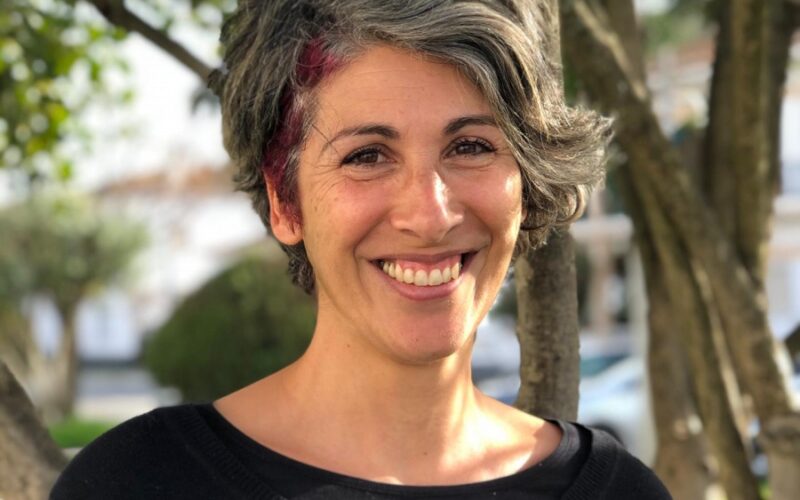
Jan-Gisbert Schultze – How a VC investor got bitten by the regeneration bug and went via Joel Salatin, Gabe Brown and Ernst Gotsch deep into syntropic agroforestry

A conversation with Jan-Gisbert Schultze, a VC investor who turned into a regenerative enthusiast and bought a small olive farm, which he is turning into the first syntropic farm in Salento, in Puglia (Italy), a region battered by monoculture olive trees.

Marta Cortegano – How to start the regenerative revolution from one of the driest places in Europe

A conversation with Marta Cortegano, cofounder of Terra Sintrópica and one of the leaders of the regenerative agriculture movement in Portugal. Straight from one of the driest and emptiest places in Europe where climate change is hitting hard, we talked about farming in challenging conditions, syntropic agroforestry and more.