Tag: agtech

Alfonso Chico de Guzmán – The ag-tech that brings cows back

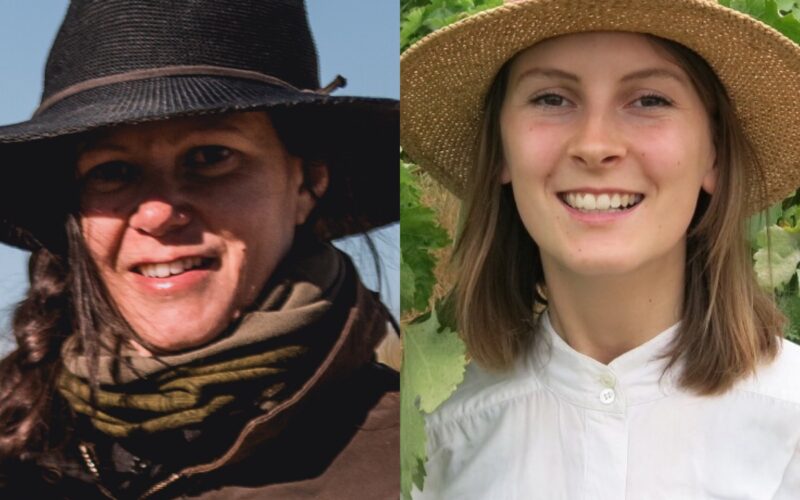
Straight from La Junquera farm, in Murcia, Spain, a Walking the Land episode with Alfonso Chico de Guzmán, a regenerative livestock farmer. This is a story about the reintroduction of animals as a tool, with all the animal welfare worked out, on a farm that has been transitioning to perennials, transitioning away from annual crops, and seems to have found the puzzle pieces to actually make it thrive. And now the question is: how to get more cows? How to get sturdier cows? How to get stronger cows that can survive outside and thrive outside? And that is surprisingly difficult. Getting cows from too far away almost guarantees that they won’t adapt quickly and won’t thrive.

And yes, there’s work to do. Are the numbers large enough to see the impact on the land? Not yet. Can we see that the land is not suffering with the animals on top? Absolutely. What is the maximum carrying capacity? Nobody knows. They’re grazing in a landscape where cows have disappeared or they’re inside in factory farms and where sheep are disappearing. How are you going to manage these landscapes at scale? How are you going to support against fires and really impact the landscape?

Beyond cows, this is a blueprint for dryland regeneration. Ponds slow stormwater, aromatics stabilize slopes, and planned grasslands increase infiltration and biodiversity. We talk nutrient density, flavor, and how management changes meat quality; we talk permits, grazing rights, and the talent it takes to ride 70 kilometers in two days. Most of all, Alfonso make the case for patient capital and watershed thinking: if funding timelines matched ecological timelines, more farms could switch from extractive annuals to living systems that pay their way.

Maria Jensen – Giving cows a voice through epigenetics while improving animal welfare and profitability

A conversation with Maria Jensen, co-founder of Antler Bio, helping dairy farmers identify and address factors limiting their herd’s full potential. What if cows could speak? Especially dairy cows. They would probably share not only the horrors of the dairy industry, but also stories of many dairy farmers who truly try their best to care for their animals and yet still fail. Their cows are neither healthy nor happy, their bank accounts look worse every year, and their mental health and marriages are shaky. Intensive dairy, unless you are massive, is a very difficult industry.

Yes, all dairy cows (and cows in general) should be, depending on the context, almost permanently outside. And yes, calves should stay with their mothers as long as possible if we are even going to start talking about regenerative dairy. But for many dairy farmers, this is still a distant pipe dream. We need to meet them where they are. If we don’t give them concrete tools now, they will never change and instead go out of business. And no, dairy won’t disappear any time soon. The market will just be absorbed by even bigger dairy cow factories, where cows never see grass or sunlight.

So how do we change this gridlock? By taking technology from the racehorse industry to let cows and herds speak: to share what’s missing, what could be improved. And, surprise, there is plenty of low-hanging fruit in improving dairy cows’ lives practically overnight from better minerals to more water points, and of course the holy grail: super-diverse pasture management.

This leads to healthier cows, fewer vet costs, and more milk. Importantly, it also points toward potentially healthier milk, and thus healthier people. It’s still too early to connect this directly to nutrient density and quality, but that’s the direction we’re headed.

We also touch upon much more: the risks of raising money from the wrong parties for such a disruptive technology, the fact that while animals and farmers win, input companies and pharmaceutical companies will likely lose. Suddenly it becomes clear which interventions work and which don’t.
And what about raising finance as a female founder? Surprise surprise—it’s not easy. Male investors, especially, waste a lot of your time.

Get ready for a conversation about disruptive tech, dairy farming margins, raising capital, and horse racing.

Dan Barber – AI-Powered natural breeding: The End of GMOs, Gene Editing, and CRISPR?

An overdue check-in conversation with Dan Barber,  chef, co-owner of Blue Hill restaurants and co-founder of Row 7 Seeds, where we dive into the fascinating world of seeds and how breeding is evolving with the explosion of AI and other technologies. No, we don’t need GMOs, CRISPR, or other risky blunt instruments. We discuss the implosion of the fake meat hype, which was at its peak when we last spoke four years ago, why insane umami flavor and potentially self-nitrogen-fixing tomatoes are revolutionary. This is a deep conversation about bread and wheat—and why breeding wheat specifically for whole meal flour is so important, where Row 7 Seeds, his seed company, is headed and why they’re launching a CPG brand using pressure-cooked vegetables (because processing isn’t a dirty word).

When your vegetables come from incredible seeds and are grown in healthy soils, you don’t need unhealthy additives. We kick things off with mouthwatering winter spinach and dive into a long conversation about the role of technology in food and agriculture. No, we shouldn’t go back to the past. No, we’re not Luddites. In fact, Dan is incredibly bullish on the role of AI in natural breeding—perhaps the best of both worlds, enabling faster breeding for local conditions rather than global crops that lack flavor, nutrients, and rely on excessive chemicals.

Get ready for a firehose of stories on food, seeds, soil, and culture!

Eric Smith – Commoditization is the root cause of all ecological destruction and human health impacts

A conversation with Eric Smith, CEO and co-founder of Edacious, who is building a technology platform for differentiating quality of food. Eric and Koen talk about measuring quality and how to turn around objectively one of the most complex systems ever, from one driven by chemicals to one driven by biology, with abundance as an outcome. The solution, according to Eric, is radical transparency.

Ichsani Wheeler and Lenka Danilovic – How to make water our friend again thanks to hippies with satellites and indigenous water management

A conversation with Ichsani Wheeler and Lenka Danilovic. Ichsani is a scientist, co-founder of OpenGeoHub and EnvirometriX, while Lenka is an hydrologist and intern at OpenGeoHub. In this conversation, we talk about the world of remote sensing, and we unpack what the eyes in the sky can help us learn about indigenous land and water management.

Zach Weiss – On a mission to train hundreds of thousands of people in key water restoration techniques

A check-in interview with Zach Weiss, founder of Elemental Ecosystems and Water Stories, about his mission to train hundreds of thousands of people in key water restoration techniques, institutions, how would Zach make the space investable and bankable, and much more.

Farmers’ Philosophy series! Koen van Seijen in conversation with Anne van Leeuwen, regenerative farmer and co-owner of Bodemzicht Farm

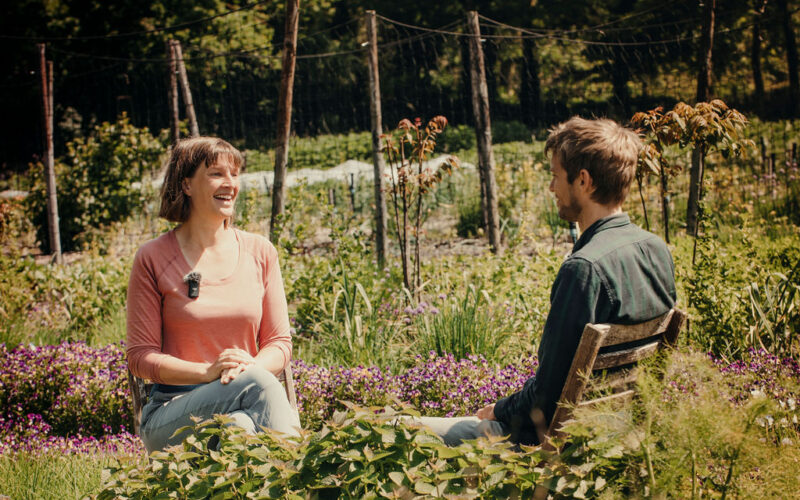
We can learn so much more from farmers than how to restore soil. Regeneration goes much further and deeper. In the second episode of the Farmers’ Philosophy series Koen van Seijen, host of the Investing in Regenerative Agriculture and Food podcast, talks with Anne van Leeuwen, regenerative farmer and co-owner of Bodemzicht Farm. A deep dive into the non-existence of nature-culture divide, getting back in touch with yourself, nutrient dense food as basic human right, community, minimum wage, true cost economy, and much more.

Connie Bowen – Instead of replacing farmworkers, let’s design agtech to help the ones doing the back breaking work in the field

A conversation with Connie Bowen, co-founder of Farmhand Ventures, a venture studio redesigning the future of work in agriculture, about the labour issue and building collaborative automation agtech.

Nicole Masters and Abby Rose on how tech can enable an army of creative thinking farmers

A conversation with Abby Rose, co-founder of Vidacycle Tech and co-host of Farmerama, and Nicole Masters, founder of Integrity Soils and writer of ‘For the Love of Soil’. They talk about the Soilmentor Regen Platform, empowering farmers, mindset shift, observation and critical thinking.

Knut Bentzen on how to scale virtual fencing, the true enabler of regeneration

The second in a series of interviews unpacking the potential of virtual fencing with the team of NoFence. This time Knut Bentzen, CEO of NoFence, we discuss the enormous potential of managed grazing of ruminants on food quality, protein production, soil carbon, water quality, animal welfare, etc.